Temperature & Pressure Requirements
- Thermal limits: Standard borosilicate withstands 450°C, quartz glass up to 1100°C
- Pressure ratings: ASME B31.1 compliant models for 6.9MPa+ systems
- Thermal shock resistance: ΔT 300°C/minute capability for rapid cycling
Material Compatibility Matrix
| Chemical | Borosilicate | Quartz | Aluminosilicate |
|---|
| Sulfuric Acid | Excellent | Good | Fair |
| Molten Salt | Poor | Excellent | Good |
| Caustic Soda | Good | Fair | Excellent |
 4 High-Temp Transparent Gauge Glass Types Compared
1. Reflex Gauge Glass
- Working principle: Total internal reflection optics
- Max temp: 500°C (with mica shielding)
- Visibility: 3:1 liquid/vapor contrast ratio
2. Tubular Quartz Glass
- Thermal stability: 0.55×10⁻⁶/°C expansion coefficient
- Applications: Glass melting furnaces, semiconductor CVD
3. Armored Borosilicate
- Protection: 316SS mesh overlay
- Impact resistance: Withstands 5J direct blows
4. Sapphire Hybrid
- Premium option: Single crystal Al₂O₃ windows
- Thermal conductivity: 35W/mK for rapid heat dissipation
Expert Installation Protocol
Pre-Installation Checks
- Verify flange rating matches system PSI
- Inspect gasket material (Graphite for >300°C)
- Confirm thermal expansion allowance (1.5mm per 100°C ΔT)
Mounting Procedure
- Torque sequence: Star pattern tightening to 20Nm
- Alignment: Laser-level verified within ±0.3°
- Safety factor: Always 2X operating pressure
Maintenance Best Practices
Routine Inspection Schedule
| Frequency | Action | Tool | Standard |
|---|
| Daily | Visual check | LED borescope | ASTM E2533 |
| Weekly | Seal integrity | Thermal camera | ±2°C variance |
| Monthly | Surface cleaning | IPA solution | 99% purity |
Critical Replacement Indicators
- Hairline cracks: >0.2mm depth detected by UT gauge
- Opacity: <80% light transmission
- Seal failure: >5% torque loss from initial setting
Cost-Benefit Analysis
Lifecycle Considerations
- Premium materials: 7-10 year service vs 3-5 years standard
- Downtime costs: $15k/hr avg in petrochemical plants
- Safety ROI: 92% accident reduction with proper monitoring
Pro Tip: Combine with IoT-enabled thermal sensors for predictive maintenance (SIL-3 compliance)


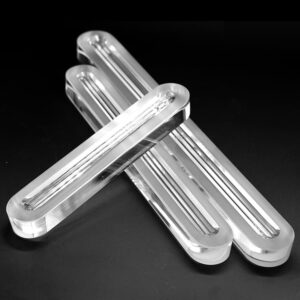 4 High-Temp Transparent Gauge Glass Types Compared